Steam Trap Audits: How to Find Failed Traps Before They Cost You
By MKS Pipe & Valve Technical Team | June 3, 2026
Failed steam traps are invisible until you look for them. A steam trap audit is the systematic survey that locates, tests, and reports on every trap so you can fix the ones that are costing you.
Failed steam traps do not trip an alarm or shut down a line. They just quietly waste steam or back up condensate while everything appears to run normally. That is the whole problem. In a system you are not actively watching, traps fail over time and the losses pile up invisibly. A steam trap audit is how you make those invisible failures visible.
Why Facilities Audit Their Traps
The case for auditing comes down to one fact: you cannot fix what you cannot see. A trap stuck open blows live steam to the condensate return around the clock, and nothing about the line looks wrong. A trap stuck closed backs up condensate and risks water hammer and equipment damage. Either way, the failure hides until someone goes looking.
In an unmanaged system, a meaningful percentage of traps fail over time, and each failure carries a cost in wasted fuel or damaged equipment. An audit is the deliberate act of going looking, before those costs compound into real money.
What a Steam Trap Audit Actually Is
A steam trap audit is a systematic survey of every trap in a facility. A proper audit does four things for each trap:
- Locates it and adds it to an inventory, often with a tag and a number
- Tests it to determine whether it is working or failed
- Records the failure mode when there is one, failed open or failed closed
- Reports the findings in a form you can act on
The deliverable is not just a pass or fail list. It is a record of where every trap is, what condition it is in, and what it is costing you. That record is what turns a one time inspection into an ongoing management program.
The Common Test Methods and What Each Tells You
Auditors use a few methods together, because no single test gives the full picture.
Visual inspection
Visual checks catch the obvious cases, like a trap that is clearly blowing live steam through to the return, or a sight glass showing the wrong flow. It is fast and useful but it does not catch everything, since many failures are not visible from the outside.
Temperature
Measuring temperature across the trap reveals condensate that is backing up. A trap running much colder than expected often means condensate is not discharging, a sign of a failed closed condition or a plugged trap. Temperature alone can be misleading, so it is read alongside the other methods.
Ultrasonic testing
Ultrasonic instruments listen to the flow inside the trap, picking up the sound signature of condensate, live steam, or no flow at all. This is the method that catches failures you cannot see and often cannot distinguish by temperature alone. In skilled hands it is the most telling of the three.
Used together, these methods give an accurate diagnosis of each trap rather than a guess.
Turning Findings Into Savings
An audit only pays off when the findings drive action. Once you know which traps have failed and how, you can prioritize. Large traps on high pressure lines that have failed open are usually the first to fix, since they waste the most steam. From there you work down the list by impact.
The audit report also gives you a number to work with. When you can show how much fuel a set of failed traps is wasting, the repair budget justifies itself. That is the difference between maintenance as a cost and maintenance as a return.
How Often to Audit and Building a Program
An annual survey is a common baseline. Systems that run at higher pressure, that are critical to production, or that simply have a lot of traps often warrant auditing more often, because an undetected failure on those systems costs more.
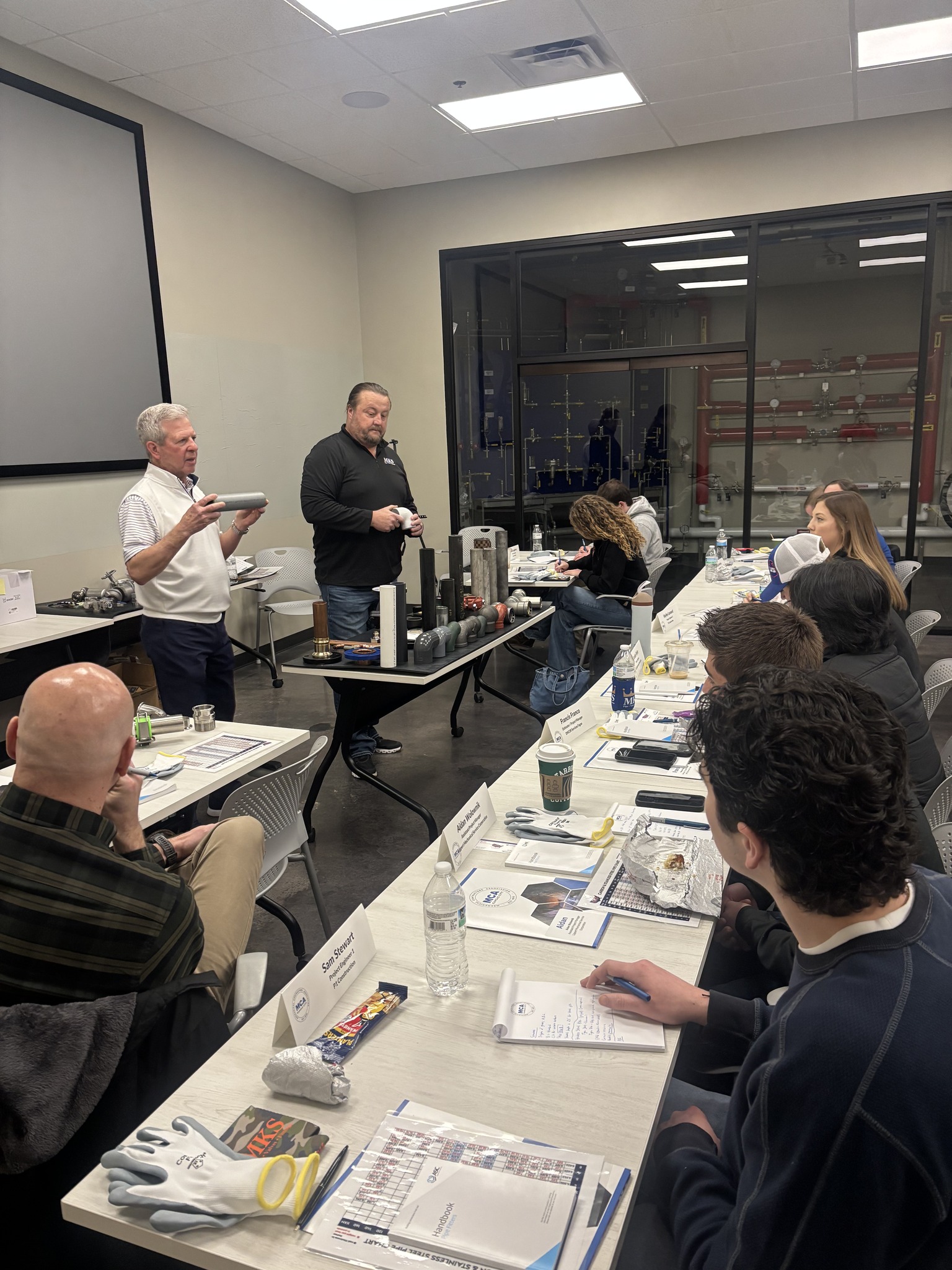
The strongest approach is an ongoing trap management program rather than a one time audit. That means a maintained inventory, a regular testing schedule, prompt replacement of failed traps, and a record that carries forward year to year. Over time you stop reacting to failures and start staying ahead of them. The MKS Steam Lab trains teams to build and run exactly this kind of program.
How MKS Can Help
MKS performs on-site steam trap audits at customer facilities across Kansas, Missouri, Nebraska, Iowa, Oklahoma, and the surrounding region. Our specialists locate and test each trap, document the condition, and help you prioritize the repairs that recover the most fuel. For teams that want to own this work in house, the MKS Steam Lab in Kansas City trains technicians to audit and manage their own traps.
To schedule an audit or talk through a trap management program, contact our team at (888) 665-2696 or info@mkspvf.com.